I greatly enjoy Rich Cooley’s nature photography featured in the Northern Virginia Daily. I especially appreciate his incredible captures of bald eagles perched high on a limb or gliding just above the river. He has earned many well-deserved awards for his photographic excellence.
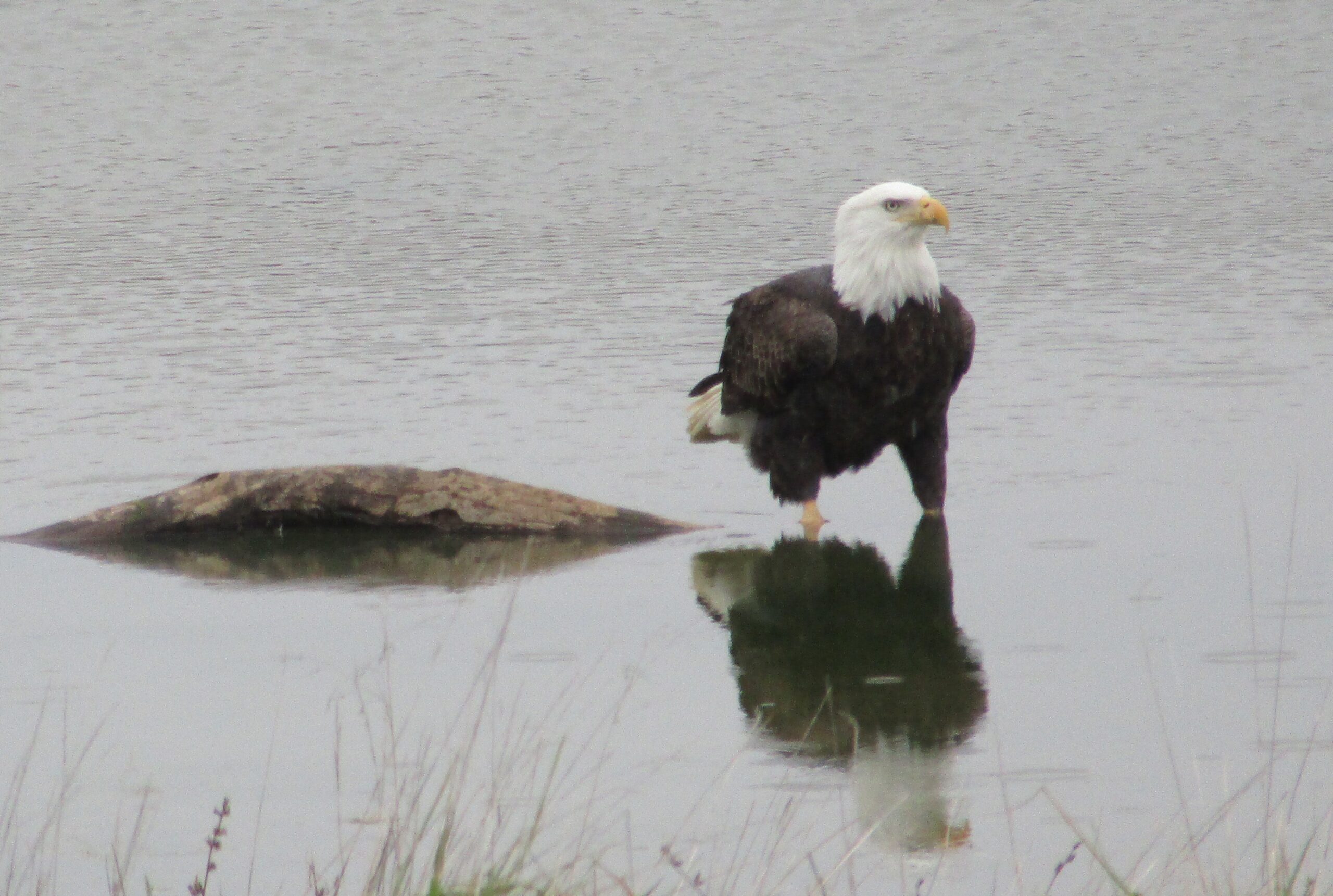
The return of eagles to the Shenandoah Valley is a welcome addition and I’ve been privileged in my treestand to occasionally glimpse them soaring overhead. Our national symbol is truly a majestic animal and has been legally protected since 1940.
Imagine, then, my father’s reaction at encountering a mounted specimen while visiting a businessman who had invited him to his office. While it’s possible the bird had been killed and mounted before that date, it didn’t look like it. And when the man pulled out a polar bear rug for repair, that visit ended quicker than an eagle can catch a bass.
Under various wildlife laws, taxidermists are forbidden to mount certain animals. It is up to them to know the regulations and follow them, for violations result in hefty fines and even jail time. Having accompanied my dad on that visit, I was impressed with how fast he exited that office to put as much distance as possible between him and those two prohibited species, as well as the man who illegally possessed them.
In 1918, the US Congress passed the Migratory Bird Treaty Act. It legally protected many birds and was amended in 1972 to include hawks and owls as well. These protections have resulted in increased populations of these species evidenced by the numerous redtails perched along Interstate 81 surveying traffic.
Prior to 1972, it was legal to kill and mount hawks and owls and dad did several during his early career. As is typical for taxidermists, customers don’t always return to pick up their animals and the artists must try to recover their investment of time and materials in other ways. When this law was amended, however, Dad was stuck with some birds that were illegal to sell.
During the late 1970s and throughout the 1980s, people would attempt to purchase these leftover mounts which Dad repeatedly refused. He was even offered gold Rolex watches and other big-ticket items in exchange for something that could no longer be legally acquired. He suspected some of these were undercover US Fish and Wildlife agents attempting to entrap him as they had some other taxidermists. If he had yielded to those tempters, he would have very likely lost his business, his reputation, and perhaps even his freedom.
He also got numerous phone calls asking him to mount these protected birds. The callers had always “found” them dead and didn’t want to see them “go to waste.” While some requests were likely legitimate, many were certainly lying about the method of acquisition in order to get them mounted. Dad never allowed them to be brought into his shop, much less preserved.
Most people probably never imagined the temptations faced by those in this unusual profession, yet each occupation has its own pitfalls to avoid. Car dealers may be tempted to move automobiles they know are stolen. Pharmacists can make big money selling drugs under the table. Builders can pad their income with dishonest shortcuts. Although enforcement agents have made it more difficult for unscrupulous individuals to profit from illegal activities, there are those who still try to make a quick buck by the easiest means.
Because all of us are tempted at times to bend the rules for our own benefit, we need to be as eager to run from enticing situations as dad was to get away from that eagle. God advises us to flee from temptations that come our way in order to avoid not only His judgment later but also unnecessary pain now. His Holy Spirit is like a giant crowbar empowering us to extract ourselves from the talons of temptation. May we use His power to quickly flee whenever we are tempted. Blessings, George