Fall is nearly upon us with its cooler temperatures, beautiful leaves, and pumpkin spice. Another normal aspect of autumn is bird migration and I am preparing to kiss our hummingbirds goodbye as they will shortly depart for warmer climates.
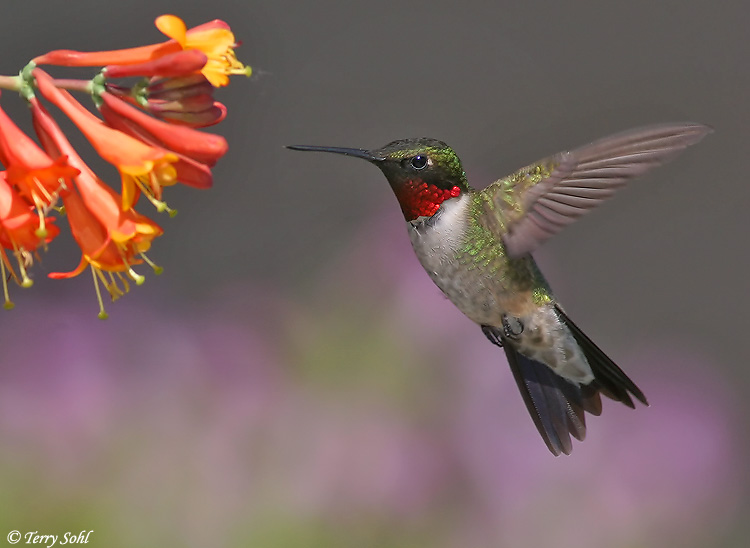
The Ruby-Throated Hummingbirds that grace our local feeders will soon be southbound toward their winter homes in Central America. Although some have already left, the rest will do so in the next few weeks making their way as far south as Panama. The parents have navigated this 3,000-mile trip before but this year’s hatchlings will find their way alone to a place they’ve never been to before covering as much as 23 miles per day and flying up to 22 hours without a rest over the Gulf of America. These figures are significant considering their wings flap 15-80 times per second and their tiny heart beats 1260 times per minute.
But how do the older birds remember their route without mile markers and how do the youngins’ find their way without a GPS? When it’s time for the return trip next spring, many individual hummers will reappear to the same nest they occupied this past summer. Such abilities confound birders and scientists alike and give testimony to the incredible Creator of these miniature winged wonders.
Of course, hummingbirds aren’t the only ones that migrate. About 2000 different bird species migrate each year. The Pacific Golden Plover is one of these. After spending summer in Alaska, they head to Southeast Asia, Australia, or some Pacific Island for wintertime. This is a 7,300-mile trek for this dove-sized bird, most of which is over open ocean. The initial stint to Hawaii is an 88-hour non-stop 2,800-mile flight since these birds are unable to swim and there is no land for a rest stop.
Even though these plovers bulk up before leaving home, they still don’t have enough energy reserves to make it to their first stopover. Even if they utilize every bit of the 2.4 ounces of extra energy they’ve stored, they would still plummet into the ocean 18 hours short of Waikiki. So how do they make it?
Like Canadian Geese, God designed these birds to draft each other in V-formations reducing energy needs by 23%. And just like geese, plovers rotate leadership thereby enabling all flock members to arrive in good health. Although many birds loose over 50% of their bodyweight during this 4-day flight, they usually land in Hawaii with some leftover fuel. Imagine a 200-pound man losing 100 pounds while jogging 4 days without eating, drinking, or resting. I’m exhausted just thinking about it.
Like the hummingbirds, plover parents head out first while their children are still adding on ounces. These youngsters who have never been to Hawaii, much less Sydney, have to find their routes completely on their own. And they do. The Hawaiian Islands are miniature specks on the enormous Pacific. If their bearings were off just a half degree leaving home, they would miss their first stop by hundreds of miles. Yet they don’t. How do they do this? While many use the word “instinct” to describe such unexplainable behaviors, believers know that God calibrated their internal maps and compasses to ensure their survival. To credit random evolution for such fetes would require a 100% success rate on the first flight or the entire species would have disappeared. Slow gradual changes in feeding, flying, or navigating would have resulted in total extinction.
The Creator of these amazing birds has also instilled a homing instinct in humans that prompts us to seek Him. And if we do so seriously and earnestly, He directs us to Himself. As we watch our feathered friends depart for warmer climates, may their innate knowledge to bulk up ahead of time, their exceptional navigation enroute, and their unbelievable endurance inspire us to glorify and worship their incredible Creator and to migrate toward Him. Praise God for hummers and plovers! Blessings, George