Building a Life With the Master Builder
As we enter a brand-new year, it’s a perfect opportunity to think, pray, and reflect on how we’re living our lives. We take inventory of the year ended and often resolve to make positive changes going forward. One way to consider our time on earth is like that of a multi-story building to which we add an additional floor each year. How we build this year will obviously affect future stories that are to be added in the years to come, God willing.
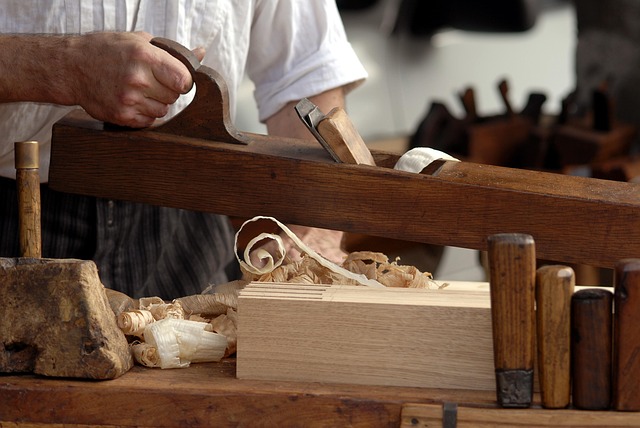
Construction is universal to all cultures as human beings need homes and other structures to support families and civilizations. Jesus Himself used building metaphors to help us understand important spiritual truths. Most are also aware that Matthew refers to Jesus as the carpenter’s son and Mark implies that Jesus Himself was a carpenter. In English, a carpenter is one who builds with wood, and as early as the second century, the ESV Archaeology Study Bible says Chrisitan texts referred to Jesus’ stepfather, Joseph, as making plows and yokes.
The Greek word for carpenter, however, is tekton and usually referred to someone who built with any and all local materials including wood, stone, mud thatch, plaster, metal, and etc. Since Israel in general and Galilee in particular have an abundance of rocks and a dearth of wood, it’s likely that Jesus and Joseph were primarily stone masons. Many believe both of them helped build the Roman city of Sepphoris which was only a short distance from their home in Nazareth. Herod Antipas directed and financed this work during the time Jesus was living in the area and the Jewish historian Josephus called the beautiful city the Ornament of Galilee.
But the Greek word tekton includes more than just a laboring woodworker. It described one with considerable ability who was responsible for designing and supervising building projects. Each village or town had their own master tekton who did not necessarily do all the building himself, but oversaw any construction that took place. We might consider him a contractor who was also a building inspector examining the work of others.
While building inspectors are not always cherished by carpenters, they are responsible to see that the codes are followed. The codes themselves are developed to protect occupants from fire, wind, earthquakes, and other events that might compromise a building’s integrity and injure or kill those within. We’ve all seen how structures in areas without building codes have collapsed or burned after even minor incidents.
Like we depend on inspectors, ancient residents depended on their local tekton to ensure their village was able to withstand various disasters, especially earthquakes which were common in the region. The buildings under his jurisdiction would reflect not just the skill, ability, and attention to detail of the actual builder, but also that of the inspector. Tektons who were lazy, apathetic, or less experienced put their whole communities at risk as all local structures built under his supervision would reflect his guidance and oversight, or lack of it.
As we begin to build a new story on our lives in 2026, let us invite the help of the Master Tekton, Jesus Christ. Paul advised us in 1 Corinthians 3:10, “Each one should be careful how he builds.” Since our lives are compilations of the years that make them up, it behooves us to build each year and each day intentionally trying to glorify God with each swing of our hammer and each stone that we lay. Jesus Himself told us to build our lives on His words that we might be able to withstand the storms that come to every life.
My prayer is that as we use our time this year to add another story on our life’s high-rise, as well as to that of Christ’s church, that we’ll ask the Master Tekton, Jesus, to inspect our work, identify weaknesses, and assist us as we build for His glory. New Year’s Blessings, George