The chilly weather the last few weeks has certainly reminded us to be thankful for the blessings of heat. It’s also reminded us of our Alaskan friends, although some of their recent temperatures were actually warmer than ours. Even worse, however, are those who stay in Antarctica to conduct research. Even during their summertime, which is now, their average temperatures stay right around freezing while normal winter thermometers hover at 30 below. Remind me not to visit in July.
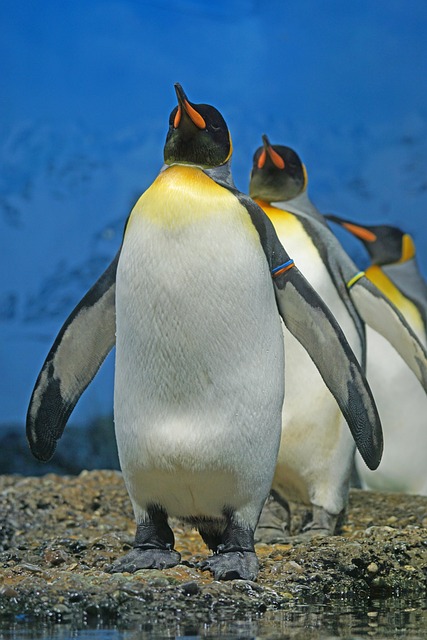
There are some critters on that snowy continent, however, that are unbothered by the bitter cold. Various species of penguins have been engineered by their Creator to withstand these extreme conditions and not only survive, but thrive in them. Since we live nearly 9,000 miles north of Antarctica, we are largely unfamiliar with its most famous adorable natives, in spite of their starring roles in Happy Feet and Madagascar. An article highlighting their uniqueness appeared in Volume 47, Number 1 of Creation magazine that helps us appreciate not only these interesting birds, but their infinitely intelligent Maker.
The body temperature of penguins is higher than ours at 100.4 degrees. Like all warm-blooded animals, they sustain this feverish warmth even when swimming in 29-degree seawater or hobbling about in frigid polar winds. How is this possible? Scientists have discovered several vital design features of these hardy avians. For starters, their feathers are constructed in such a way that the normal hook and barb structure found on other birds is enhanced, creating a wrinkled 3-D arrangement where air becomes trapped between the microscopic components. This keeps water from adhering to their feathers when they jump out of the ocean by reducing surface area of water droplets which prevents ice from forming on their bodies.
In addition, emperor penguins have 4 plumules, or down feathers, surrounding every single contour feather. Down is one of God’s best insulators that we have tucked into our coats, vests, comforters, and more. Researchers also discovered special structures at each feather tip to keep all their feathers properly aligned thus preventing water from getting inside their coats and cooling their bodies.
Although we normally think of animals swimming through water, it may be more accurate to say that penguins fly through their feeding grounds at over 20 miles per hour. God has contoured their bodies to create lift and thrust as they maneuver about in the icy liquid that holds their dinner. They push with their feet and steer with their wings which also adjust to reduce resistance like bendable hydrofoils. Unlike birds that fly, the bones of these swift aquanauts are not hollow, which would add buoyancy and make their diving more difficult. Once again, God’s amazing creations demonstrate His infinite wisdom.
Many penguins spend up to 75% of their time in the sea and have mastered the aquatic arts. These critters that waddle awkwardly on land can reach diving depths greater than 1,850 feet while holding their breath for over half an hour. God has tailored this bird to its environment by slowing its diving heart rate to six beats per minute and devised other metabolic capabilities that facilitate such spectacular fetes. When they’re done diving down, they even approach the surface at angles to avoid decompression sickness that divers call the bends.
Not only do these incredible design features help penguins to flourish in one of the harshest habitats on earth, they also are inspiring manufacturers to create better insulation and other products that benefit humans. God’s wisdom in matching penguins to their unique environment reminds us that He also knows the challenges each of us face in our own difficult circumstances and has already enabled us, with His help, to thrive there. He’s given each of us the unique abilities we need to flourish, bless others, and glorify Him right where we are.
As we thank God that we don’t live in Antarctica, let us praise Him for creating penguins to thrive there. Frigid blessings, George