Summertime is gardening time! Although we are several inches low on annual rainfall, recent showers have helped to keep many local gardens looking good and I’ve even seen some photos on Facebook of fresh tomatoes! I used to grow my own vegetables, but I got tired of the deer stealing the rewards of all my hard work and decided to patronize local farm markets instead. We are blessed to have several close by!
I’ve done my share of gardening, however, beginning with my parents who had two, and then continuing with my part-time high school job on an acre-sized enterprise. The owner had a weekly huckster route to northern Virginia where he sold the tomatoes, squash, green beans, corn and other produce that the soil yielded. Over those years I became well acquainted with preparing the seedbed, planting, spraying, weeding, and harvesting.
While some vegetables like corn grow on stalks, and others like peppers grow on bushes; watermelons, cantaloupes, and cucumbers grow on large spreading vines. Hot sunny days combined with adequate rainfall yield vines that sprawl over vast areas claiming huge swaths of the garden for themselves if left unattended. Gardeners must often steer or train the vines to prevent them from overtaking other plants and either shading out or suppressing other desirable crops.
The tendency of vines to quickly take over the garden landscape reminds me of sin’s nature to dominate all aspects of our lives. Many times, the same conditions that foster success and prosperity are also conducive to less desirable traits that can easily overwhelm positive aspects of our character. Even beneficial activities can expand to such an extent that they prevent other facets of our personality from growing, blooming, and producing fruit. Left unchecked and untrained, they can even grow into idols that completely shade out our relationship with Jesus.
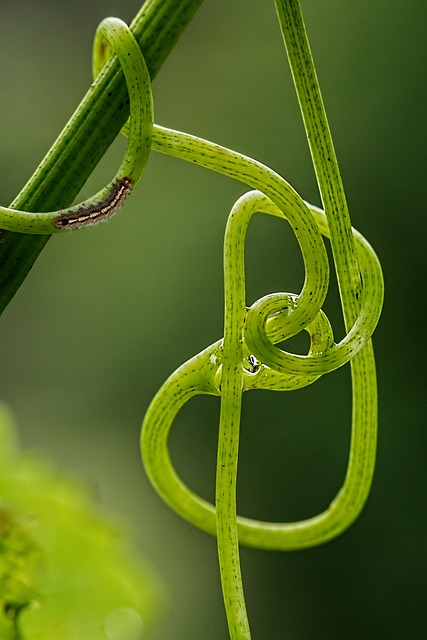
Most vines have tiny tendrils that constantly grasp for some potential stem or support to wrap themselves around. When they acquire something suitable, they aggressively enlarge and strengthen the initial loop and add several more that increase in diameter to fortify their hold. Freeing other plants from these tendrils can be challenging and labor intensive and sometimes results in damage to the host vegetables. In a similar way, sin’s tendrils reach out for any available host they can grasp and once they find one, they immediately attempt to solidify their position.
Over time, a vine’s tendrils, as well as those of sin, become more and more difficult to extract, and before we know it, we have major problems that have so attached themselves that it’s hard, if not impossible, to extricate ourselves without causing collateral damage. Both the wise gardener and the wise Christian will regularly pull any weeds that may grow while they are still small and train the ever-lengthening vines into proper areas. We must invite the Holy Spirit to help us identify and remove any potential weeds and to keep even good activities properly controlled and focused.
Instead of entwining tendrils, English Ivy has specialized structures called aerial rootlets enabling it to climb up walls and houses. As these attach to every available surface, they too cement themselves making their removal exceedingly difficult. These efforts often provoke battles with spiders and bees that enjoy the protection the ivy affords. When tearing it lose, one has to invite God’s help to control both the vine as well as the tongue.
Hebrews 12:1 warns of sin that easily entangles. At first, it may not seem like a serious issue, but left unrestrained, and unaddressed, it quickly sprawls wildly out of control wreaking havoc and destruction on even the best of gardens. That same verse commands us to throw off these hindrances in our Christian life that we may live victoriously for Jesus. As we enjoy the benefits of summer’s gardens, let us praise God for them and ponder the many lessons they can teach us. Blessings, George