Firearms season for deer came in with a bang this past Saturday in Shenandoah County and several hunters successfully harvested some nice bucks. As of this writing, I am not one of them, but I am still chasing the ever-elusive monster.
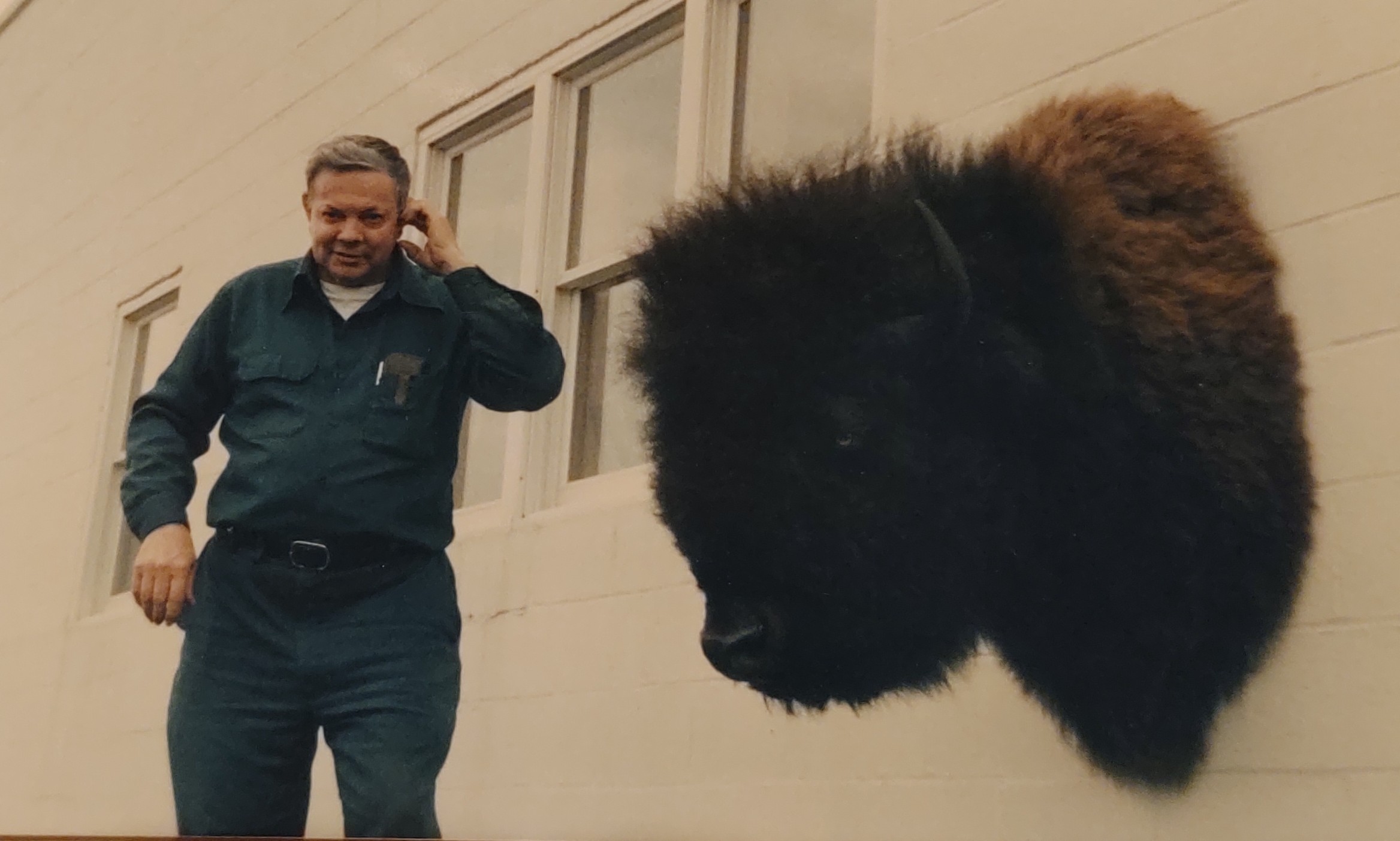
The falling leaves and autumn smells always remind me of my father’s taxidermy shop and the busyness of fall hunting seasons. Most years, customers had just picked up their finished heads making room for the new batch of trophies. I was privileged to stand at the end of his counter and hear the stories that came in with each rack.
Thankfully, our dad recorded some of his memories from his early years. According to his writings, he was discharged from the Army Air Corps on a Wednesday and began his apprenticeship that Friday through the GI bill under Paul Kaltenbach. This man had worked for Jonas Brothers which was one of the largest and most well-known taxidermy firms in Colorado.
Dad’s first responsibility was to make the paper head forms that were used like manikins beneath the skin. He reported making 6-8 of these each day. (During my college summers, I daily made 4-5 times that many out of polyurethane.) Dad also had to mount deer feet that were fashioned into gunracks, lamps, and other novelty items. In one instance, as he constructed an ash tray, he didn’t assemble it just right and his mentor made him tear it apart and redo it. Dad said that it upset him quite a bit but later considered it some of his best training. He wrote, “Do it right or not at all!”
Dad also learned to skin heads so the hide, or cape, could be used for mounting. It involves some skill to complete without cutting holes which require mending. He was docked five cents for each hole he cut which, in the late 1940s, could amount to a bit of money. He quickly learned to control his knife. At some point in his training, Mr. Kaltenbach told him he’d make a good taxidermist’s helper, but he’d never make a taxidermist. If only he could have seen Dad 40 years later!
After completing his apprenticeship, Dad returned to the Shenandoah Valley in 1949 and started his business in Maurertown behind his parents’ fruit market. Thankfully he had another job helping an electrician, for the first year he only mounted 6 deer heads at $19 each. After 3-4 years of part-time taxidermy, he built up his business to become full-time, and he continued to operate as such for next fifty years.
In 1958, he erected his new shop along the Valley Pike and in the 1980s and 90s, he mounted over 300 deer heads and 50 bears each year in addition to fish, foxes, squirrels, and other small game animals. Over the years, he ended up mounting every North American game species except a Desert Bighorn Sheep. He even mounted African trophies including Cape Buffalo and Sable Antelope.
Even though his mentor didn’t believe in him, the lessons he taught Dad served him well for taxidermy is very tedious and detailed, which explains why I am not a taxidermist. While I grew up dreaming of treading my father’s footsteps, God had other plans and Dad closed his shop about 2005.
Looking back, while he resented it at the time, Dad grew to appreciate Mr. Kaltenbach’s insistence on perfection for it kept Dad’s customers returning year after year. Hebrews 12:11 says, “No discipline seems pleasant at the time, but painful. Later on, however, it produces a harvest of righteousness and peace for those who have been trained by it.”
Has there been anyone in your life whose discipline you didn’t appreciate at the time but that you grew to cherish later? As we enter another November, I pray that you’ll give thanks for all those God has used to mentor you in life and in the faith. Blessings, George