Tomorrow marks the anniversary of the turning point of WWII. The Allies’ amphibious landing of 160,000 troops on the beaches of France foreshadowed the beginning of the end of The Third Reich. While the cost was high in terms of human lives and bodily injuries, the resolve, courage, and skill of those men steered the course of history away from Hitler’s horrible highway and toward the freeway of freedom.
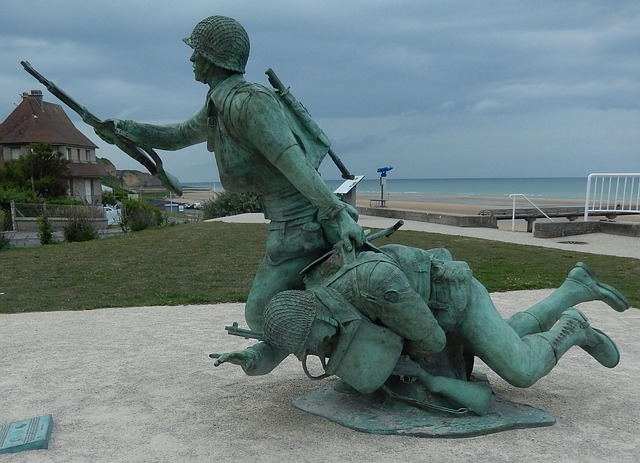
When General Eisenhower issued the order to proceed that day, he rallied his troops with words of challenge and bravery that also included, “And let us all beseech the blessings of Almighty God upon this great and noble undertaking.”
President Franklin Roosevelt also invited Americans to join him in praying that day for “…our sons, the pride of the Nation.” He asked God to, “Give strength to their arms, stoutness to their hearts, steadfastness in their faith. They will need Thy blessings…We know that by Thy grace…our sons will triumph…With Thy blessing, we shall prevail…and a peace that will let all of men live in freedom, reaping the just rewards of their honest toil. Thy will be done, Almighty God. Amen.” Praise God the prayers of Eisenhower, Roosevelt and the American citizens were heard and answered and the Nazi forces were defeated.
Most are aware that the weather played a decisive role on D-Day. Rough seas delayed the landing by 24 hours and the Germans were convinced that the lingering waves would prevent any immediate assault. Consequently, they relaxed their vigilance, contributing to the Allied success.
This was not the first time weather “miraculously intervened” to favor the American cause. In August of 1776, an unprecedented fog near New York City allowed Washington’s troops to avoid detection and evacuate safely, averting an early and decisive defeat in the American Revolution. In March of that same year, a massive snowstorm prevented the British from attacking Boston and caused General Washington to say, “That this most remarkable Interposition of Providence is for some wise purpose, I have not a doubt.” He knew God was involved.
Later, at the Battle of Cowpens in January of 1781, Generals Daniel Morgan and Nathaniel Greene led the Americans in a rapid retreat after scoring a major victory against British Generals Cornwallis and Tarleton. As the Americans moved northward, they came to the Catawba River in North Carolina. Just two hours after they crossed it at Sherrill’s Ford, their enemies arrived at the same location only to be blocked by a flash flood brought on by a fierce storm upriver.
Over the next few days, Cornwallis would have defeated them at the Yadkin River, but rain had flooded it as well. When both armies raced to the Dan River, the Americans successfully crossed but the British Commander Clinton wrote, “Here the royal army was again stopped by a sudden rise of the waters, which had only just fallen (almost miraculously) to let the enemy over.” These thwarted river crossings culminated in Cornwallis’ eventual surrender at Yorktown that October. Like D-Day, how differently things might have ended if “the weather” had not helped.
Similar “coincidences” happened during The War Of 1812 when British Admiral Cockburn set Washington, DC on fire. Shortly thereafter, a tornado touched down (in August, no less) followed by two hours of pouring rain which put out the fires. A month later, torrential rains so softened the ground surrounding Baltimore’s Fort McHenry that most of the British cannonballs did not explode but sank into the mud. It was during that battle that Francis Scott Key wrote our national anthem including the fourth verse that boldly declares, “In God is our trust!”
These and other Godly interventions can be discovered in Susie Federer’s book, Miracles in American History. As we observe D-Day and remember those brave soldiers, let us retell how God has worked in wondrous ways throughout our nation’s history to preserve and bless these United States. Blessings, George